France: The Street and
The Deficit
Five hundred fifty thousand people in the street, a deficit of 5.1 percent of GDP, and a ten-year borrowing cost at its highest since 2002.
France had one of its most violent days of protest in decades on Saturday. The Interior Ministry counted about 550,000 people in 110 marches. The CGT union claimed 800,000. By Sunday, nearly 1,800 people had been detained and more than 500 police, gendarmes and firefighters were hurt. One protester died in Paris. In Limoges, the 143-year-old city hall was set on fire and partially destroyed. In Bordeaux, the mayor said up to 100 stores were looted.
Most marched peacefully. The damage was done after dark, by smaller groups, in city after city. But the size of the peaceful crowd is the political fact. It was not one group. It was students, teachers, parents, unions, retirees and veterans of the Yellow Vest movement, all in the street at the same time.
It started in a classroom. On September 18, students at a high school in Créteil, southeast of Paris, walked out over missing teachers and run-down buildings. Nearly one in ten teaching hours at French state high schools goes unstaffed. Classes run to 35 students. The movement spread through the Paris suburbs and then the country. A separate protest had begun three days earlier, on September 15, over fuel prices, with diesel near €2.37 a liter. By October 17 the two movements had merged, and the unions had joined.
The government has offered two concessions: about 3,000 teachers pledged to fill vacancies, and 10 million barrels of diesel released from strategic stocks. Neither calmed the street. On November 5, five union federations, including the CGT and the moderate CFDT, have called a strike day against the 2027 budget.
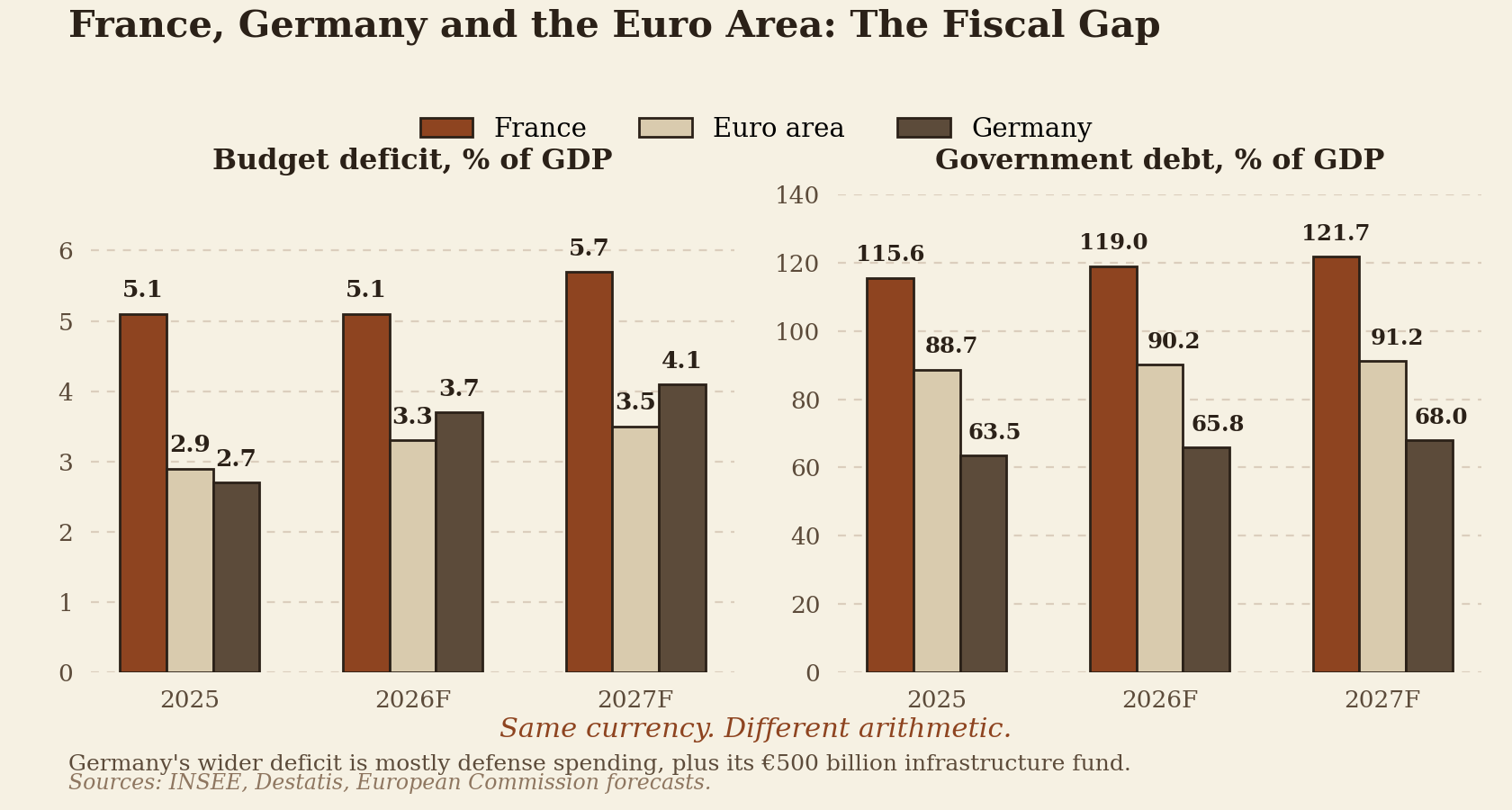
That budget is the real subject. France ran a deficit of 5.1% of GDP in 2025. Its debt stands at 119% of GDP, a postwar record. Prime Minister Sébastien Lecornu’s budget asks for €54 billion of savings, with public wages and most pensions frozen. Interest payments alone will absorb more than half of next year’s deficit. The finance minister says they are on course to reach €100 billion a year by the end of the decade.
Pensions sit inside every one of these fights. A government report published this month found 32% of the Education Ministry’s budget goes to civil service pensions. The state pension scheme has 0.94 workers paying in for every pensioner drawing out. Students are told there is no money for teachers. They can read where the money goes.
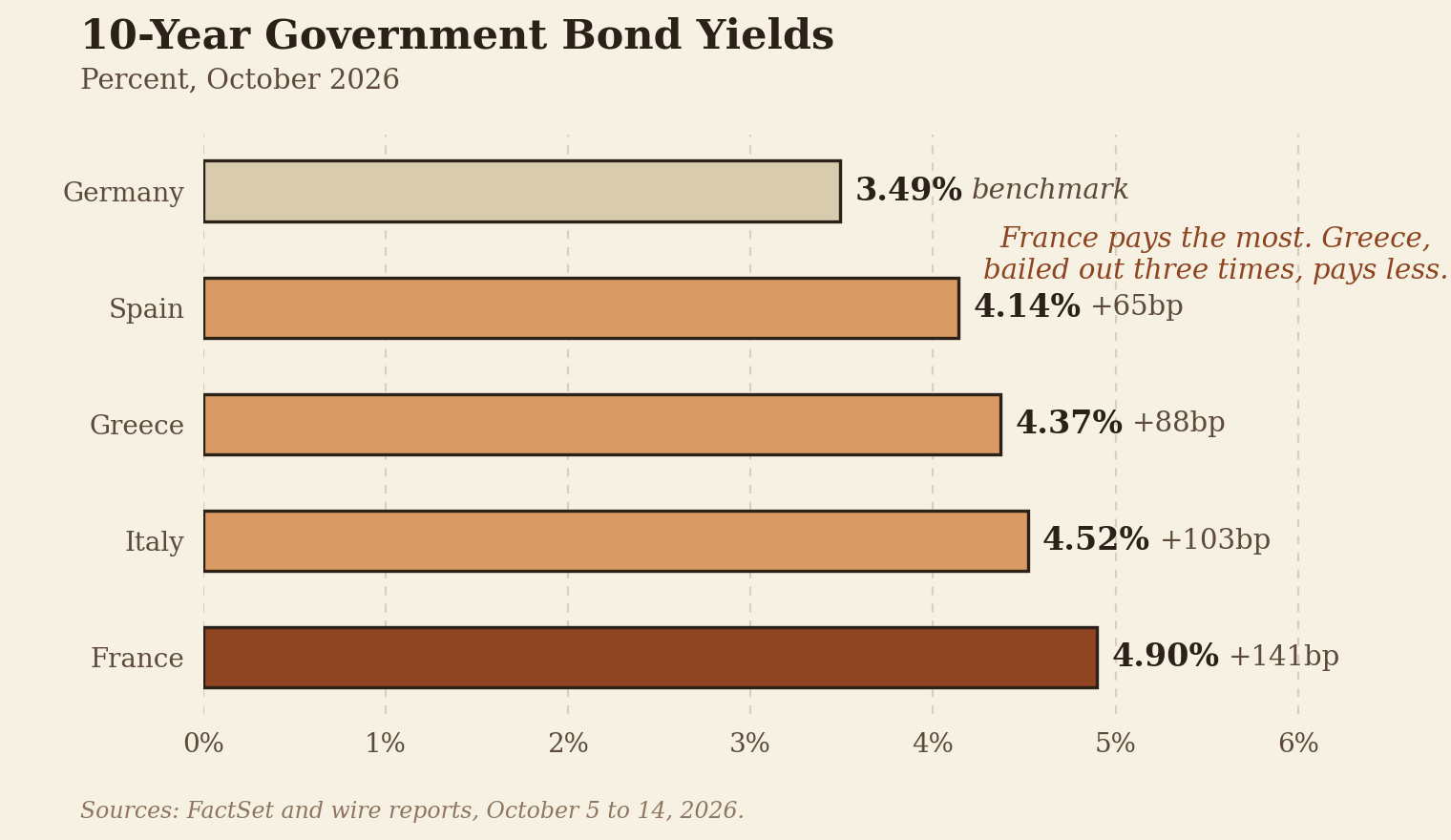
For decades, French governments bought their way out of the street. In the words of one Reuters correspondent in Paris, money magically appeared to calm things down. That option is now priced. On October 1, the day the budget was presented, France’s 10-year borrowing cost hit 4.96%, the highest since 2002. The spread over German Bunds widened from about 85 basis points in early September to about 150 at its peak. France now pays more to borrow than Italy, and more than Greece. The market moved on the budget, before a single window was broken. The protests then told the market the budget may not pass.
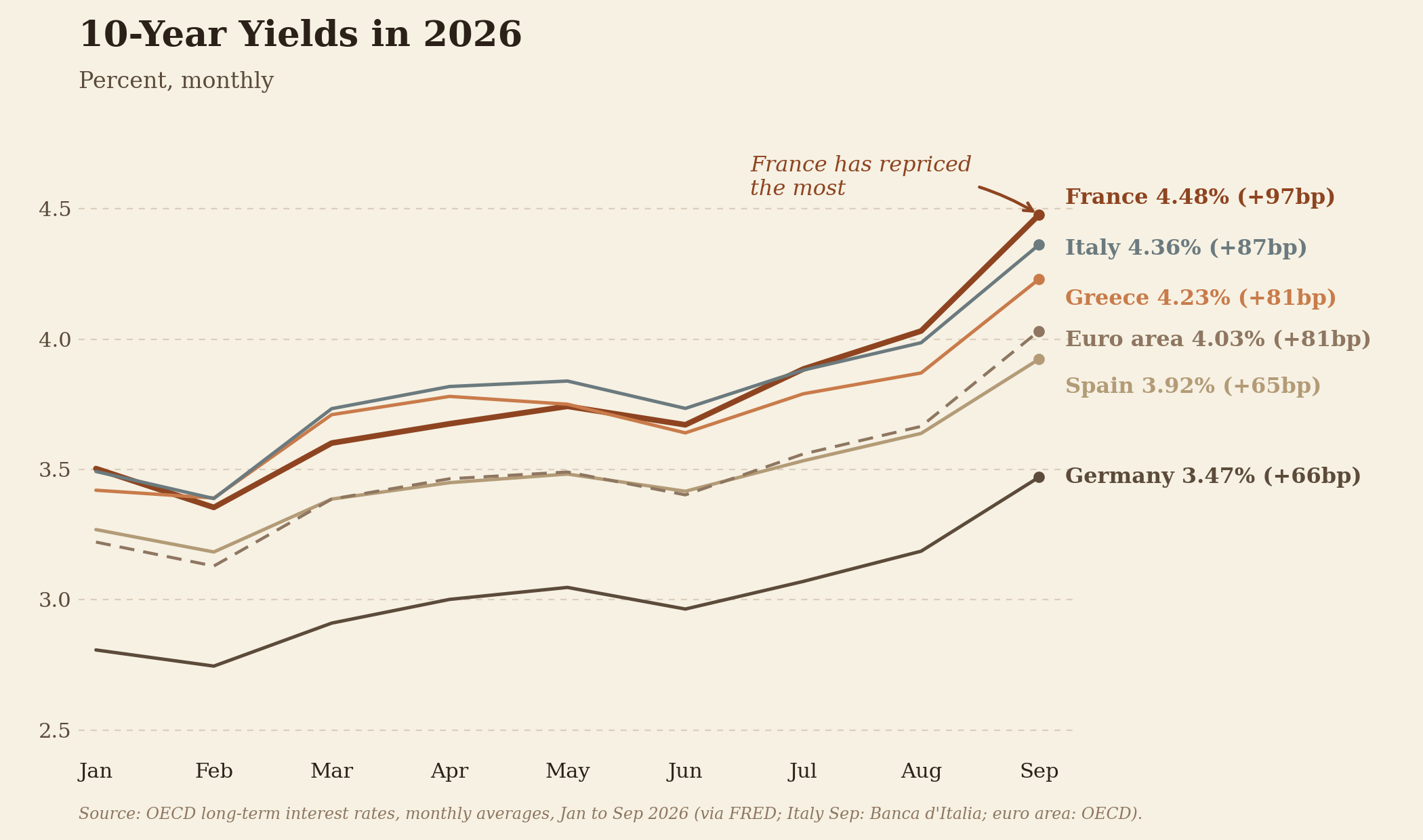
Measured on monthly averages, France’s 10-year yield has risen 97 basis points since January, from 3.50% to 4.48% in September, the biggest repricing of the five. Italy is next at 87, then Greece at 81, Germany at 66 and Spain at 65. The whole group moved up this year. France moved the most.
The chart shows the year at a glance: all six lines climb through 2026, and France’s runs on top. On October 1 the French 10-year touched 4.96%, the highest yield of this crisis and the highest since 2002. Within the living memory of this market, French money has never cost more than it does now, with the street at its loudest.
Germany’s growing deficit is mostly defense spending, plus the €500 billion infrastructure fund. Germany is growing deficits from strength, France from a cliff.
So is this the worst France has seen? On crowds, no. May 1968 saw about 10 million workers on strike. In March 2023, pension protests drew 1.09 million on the government count, 3.5 million on the CGT’s. The 1995 and 2006 protests forced retreats within weeks. The Yellow Vests peaked lower, about 288,000 on day one, but returned every Saturday for months; 11 people died, and the government conceded roughly €10 billion.
What it has produced, faster than any of them, is violence: close to 1,800 detentions in a day, more than 900 police injured across the month by the prime minister’s count. Lecornu called it “among the most violent in decades.” On crowds, it is not the largest. On single-day violence, it ranks at the top.
What to watch is the sequence from here. The budget has to survive a parliament that has already toppled two prime ministers over austerity plans. Moody’s reviews France’s rating on October 23. The November 5 strike day will show whether the unions can turn a Saturday crowd into weekday economic pressure, the one thing this movement has not yet done. Behind all of it sits the presidential election of April and May 2027, with Marine Le Pen leading in the polls.