A bank or payment company keeps the ledger. It decides which transaction is valid and updates everyone’s balance.
From experiment to asset
The story of Bitcoin.
Bitcoin began as a nine-page proposal for electronic cash. It became a working network, then a technology trade, then an asset that institutions could buy through ordinary brokerage accounts. The code changed slowly. The meaning changed fast.
01 / The idea
Money without a central bookkeeper
On October 31, 2008, someone using the name Satoshi Nakamoto published Bitcoin: A Peer-to-Peer Electronic Cash System. The problem was simple to state and hard to solve: how can people send digital money directly when digital files can be copied?
A network keeps one shared history. Proof of work makes rewriting that history expensive, and every participant can check the rules.
The breakthrough was not “internet money.” It was digital scarcity without one company in charge.
02 / Early years
From paper to proof
The first years were not about Wall Street. They were about proving that the network could exist, move value, and keep running without its creator.
The whitepaper
Satoshi posts a design for direct electronic payments. Nine pages describe the ledger, proof of work, incentives, and the rule for agreeing on one history.
The first block
The genesis block starts the chain. Its embedded newspaper headline also fixes the moment in time, during a global banking crisis.
The first person-to-person transfer
Satoshi sends 10 BTC to cryptographer Hal Finney. The system moves from one computer to a network of at least two participants.
Two pizzas
Laszlo Hanyecz trades 10,000 BTC for two pizzas. It becomes the first widely documented purchase of physical goods with bitcoin.
The creator steps away
Satoshi stops communicating publicly. Bitcoin keeps operating. That absence becomes part of the design story: there is no founder who can simply rewrite the rules.
The first halving
The reward for adding a block falls from 50 BTC to 25 BTC, exactly as the software specified. The supply policy works without a committee meeting.
03 / How it works
Three moving parts
You do not need to understand the cryptography to understand the system. Follow the transaction.
A signed instruction
A wallet uses a private key to authorize a transfer. The key proves control. It is not a name, password, or bank approval.
A public ledger
Transactions are grouped into blocks. Each block points back to the one before it, creating an ordered history that anyone can inspect.
A costly contest
Miners spend computing power to add the next block. Other computers reject any block that breaks the rules. The reward pays for securing the network.
Proof of work
Thousands of computers race to solve the same difficult puzzle. Solving it takes real machines and real electricity. The winner earns the right to write the next page of Bitcoin’s ledger and receives new bitcoin as payment. Everyone else checks the page. Faking an old page would mean redoing that costly work, then outrunning the honest network. That is why changing the record is so difficult.
04 / Halvings
The supply rule is the product
Bitcoin does not release all of its coins at once. About every 210,000 blocks, the reward paid to miners is cut in half. Of the 21 million bitcoin that will ever exist, about 20.1 million have already been mined. Fewer than 1 million are left to enter circulation, and today’s rate is roughly 450 BTC per day.
200950 BTC
201225 BTC
201612.5 BTC
20206.25 BTC
20243.125 BTC
The bars show the reward per block relative to the original 50 BTC reward. A halving cuts new issuance. It does not cut anyone’s existing coins in half.
05 / Three identities
One asset, three ways to see it
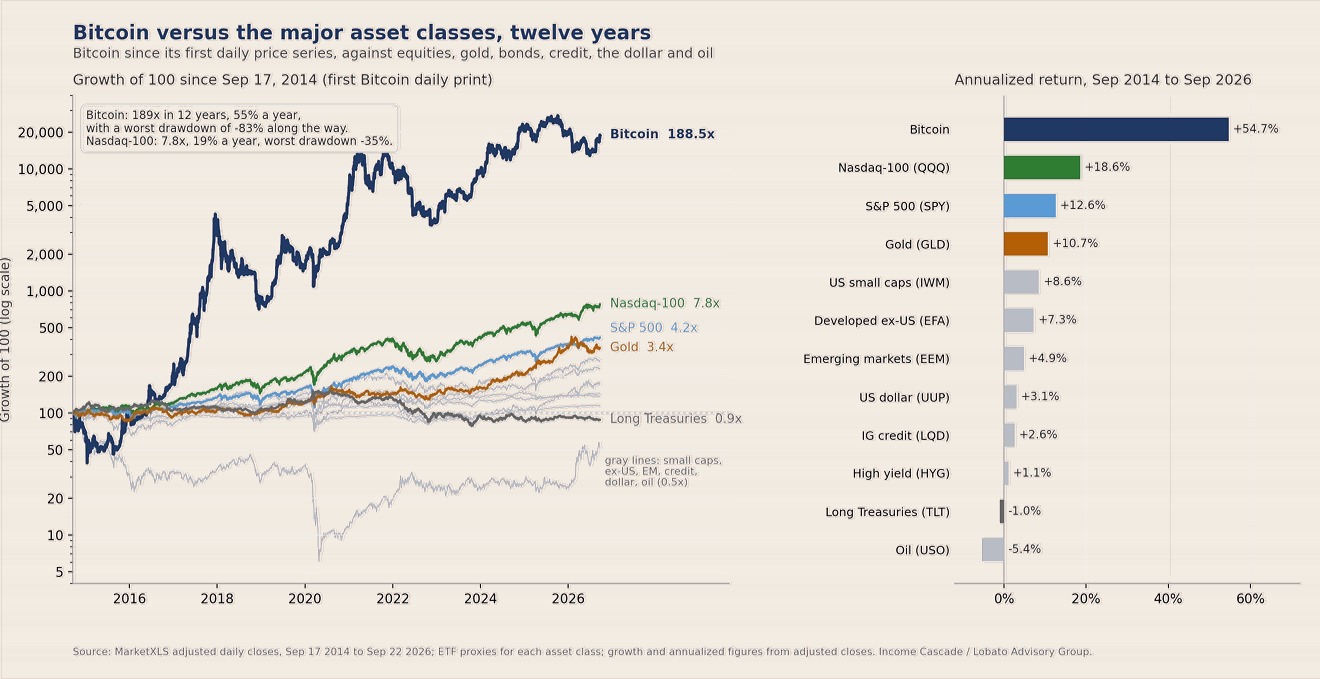
Bitcoin did not move neatly from one identity to the next. Each story arrived, gained an audience, and stayed. Today all three still compete to explain the same network.
The technology experiment
The question: can strangers maintain money together without trusting one operator? Early Bitcoin was code, community, and a live test of decentralized consensus. Its value was inseparable from whether the network worked.
The technology proxy
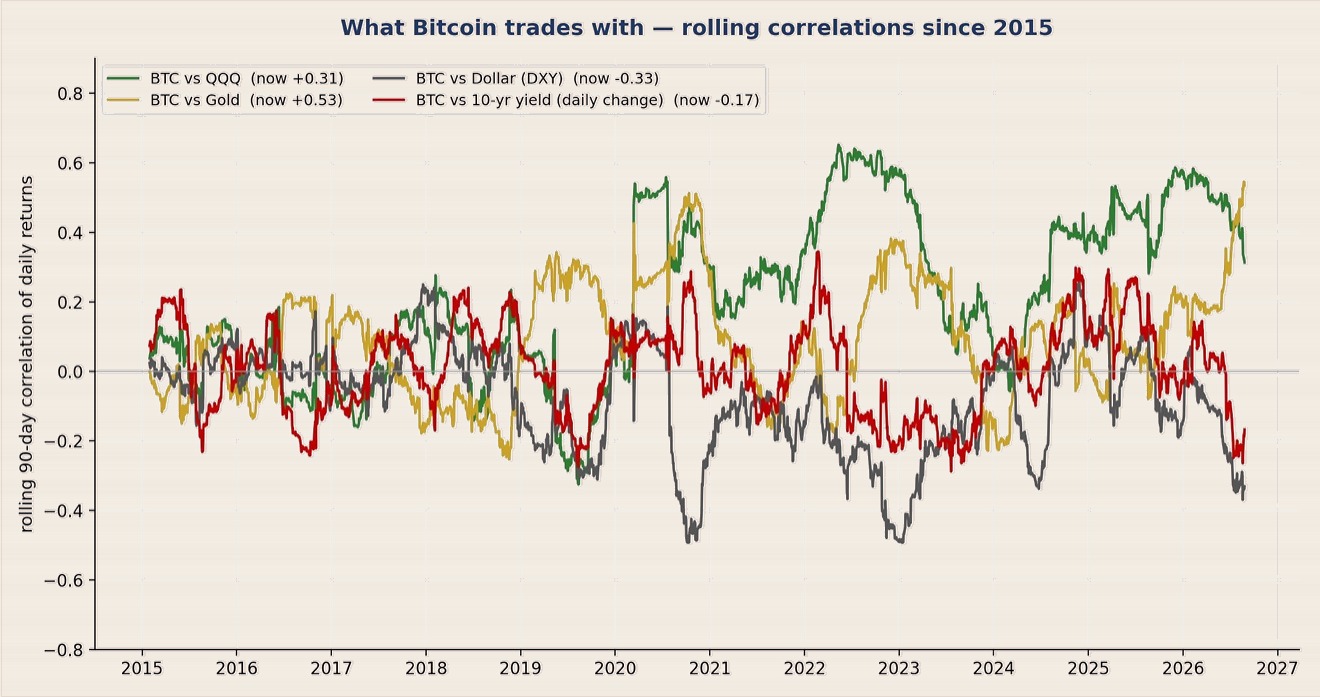
The market behavior: as trading broadened, Bitcoin often moved like a high-risk technology asset. Easy money and investor appetite helped crypto and equities move more closely together, especially after 2020.
The store of value
The investment case: fixed supply, portable ownership, and no central issuer make Bitcoin look more like digital gold. But the label describes an ambition, not a guarantee. Its price can still move violently.
06 / ETF era
Wall Street built a front door
On January 10, 2024, the U.S. Securities and Exchange Commission approved rule changes for 11 spot bitcoin exchange-traded products. The significance was access, not a change to Bitcoin itself.
11
spot bitcoin products received approval together. Investors could now get price exposure in a familiar brokerage wrapper.
Same asset. Different doorway.
An ETF share is a security issued by a fund. The fund holds bitcoin. The investor owns shares in the product, not coins controlled by a personal private key.
Owning bitcoinYou control coins on the network and take responsibility for custody.
Owning a spot ETFYou own fund shares while the fund and its custodian handle the bitcoin.
07 / What it is now
The honest answer is “all three”
Bitcoin is still a network experiment, still trades with risk appetite, and is increasingly held as scarce long-term capital. Which identity dominates can change with market conditions.
What Bitcoin is
- A public settlement network
- A digitally scarce asset with programmed issuance
- A bearer asset that can be held directly
- A volatile financial asset with global liquidity
What Bitcoin is not
- A company with revenue or a chief executive
- A claim on cash flows
- Anonymous by default
- Stable in price
- Protected from loss when private keys are mishandled
The question that matters: not “Which story is correct forever?” but “Which identity is the market pricing right now?”
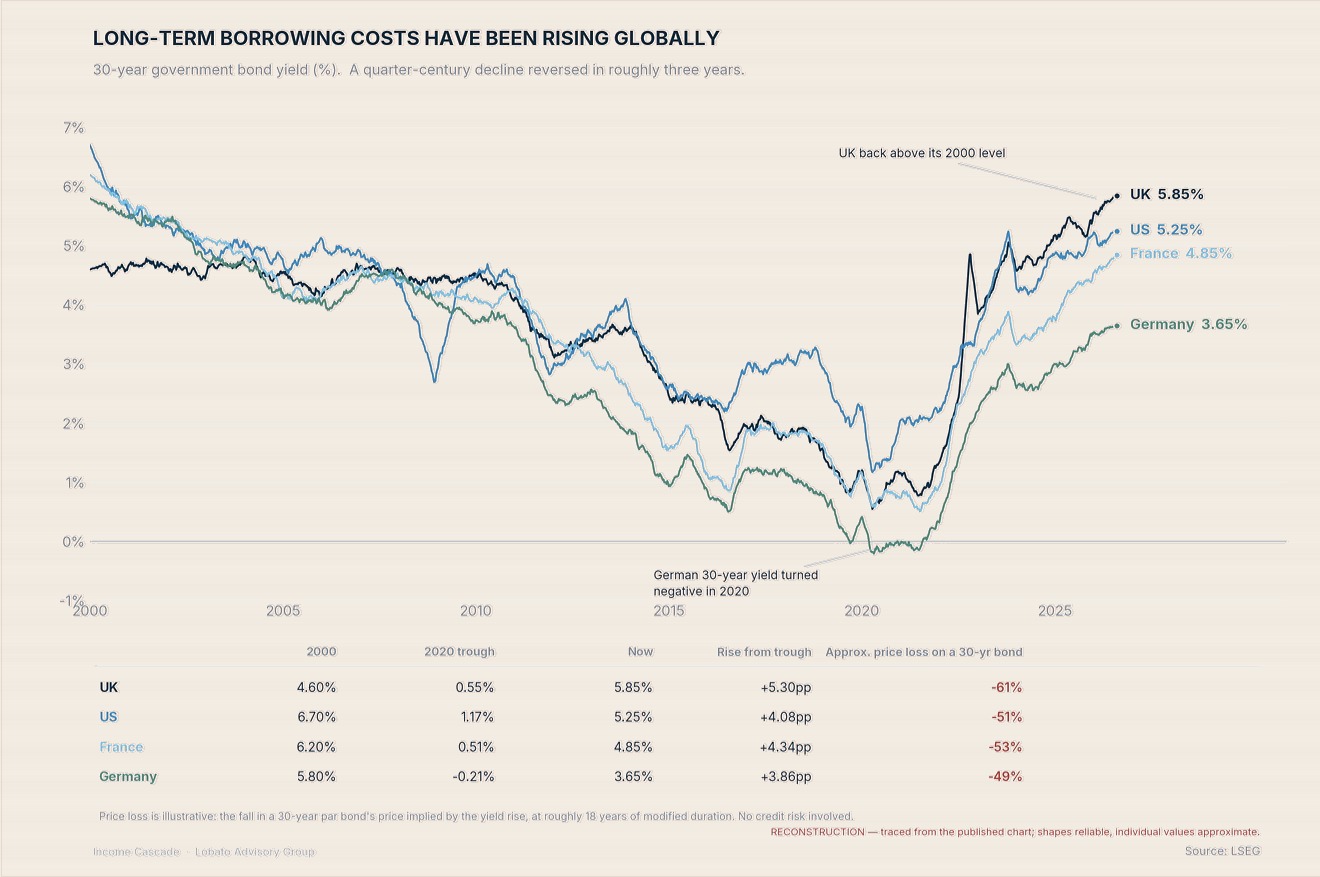
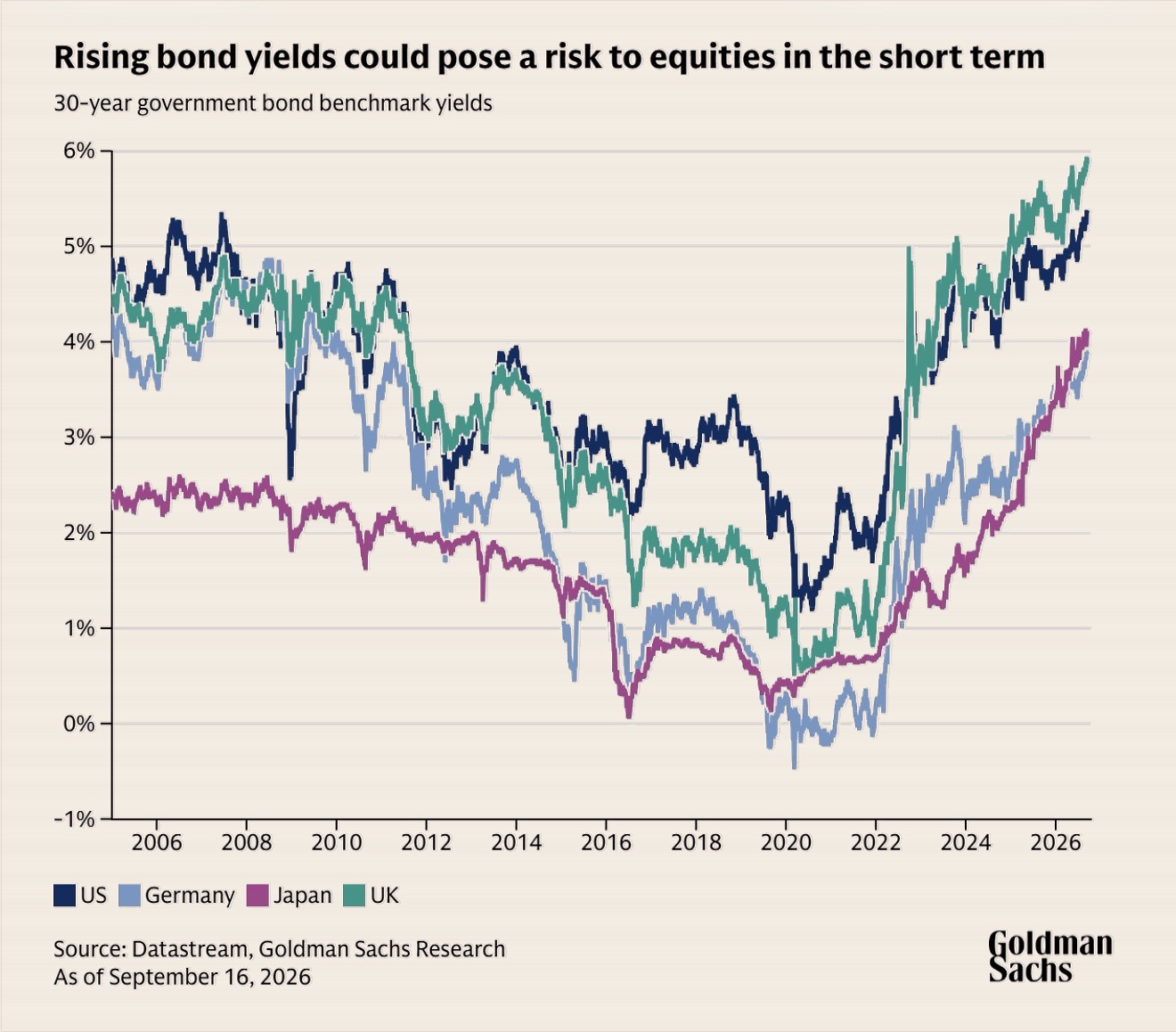
That shift leads to the next question. What happens when governments need to issue record amounts of debt, technology companies need trillions for AI, and both are asking the same pool of capital to fund them?
08 / What is next
The scarcity trade meets a borrowing wave
Heavy borrowing is not debasement by itself. It creates fiscal pressure. If that pressure is answered with monetary financing, inflation, or interest rates held below inflation, each unit of currency buys less. That loss of purchasing power is debasement. It is why scarce assets enter the conversation.
The United States passed $40.1 trillion of total public debt in September 2026. Global debt reached $365 trillion in the first half of 2026, after rising another $10 trillion in six months.
Those numbers are no longer abstract. Through the first eleven months of fiscal 2026, US net interest cost reached $1.05 trillion. Military spending through the Department of Defense was $833 billion. Interest already cost more than defense, with one month still left in the fiscal year.
Interest now costs more than defense
$18TProjected sovereign bond issuance across OECD countries in 2026, up from $12 trillion in 2022.
$29TProjected government and corporate borrowing worldwide in 2026, a new record.
Governments are not the only large borrowers. Nine hyperscalers raised $122 billion in bond markets in 2025. The OECD estimates those companies could spend $4.1 trillion on capital investment from 2026 through 2030.
That creates direct competition for capital. A pension fund or insurer deciding where to lend can choose a Treasury, a technology company, or another borrower. When the supply of bonds rises this quickly, yields can stay high even if central banks cut short-term rates.
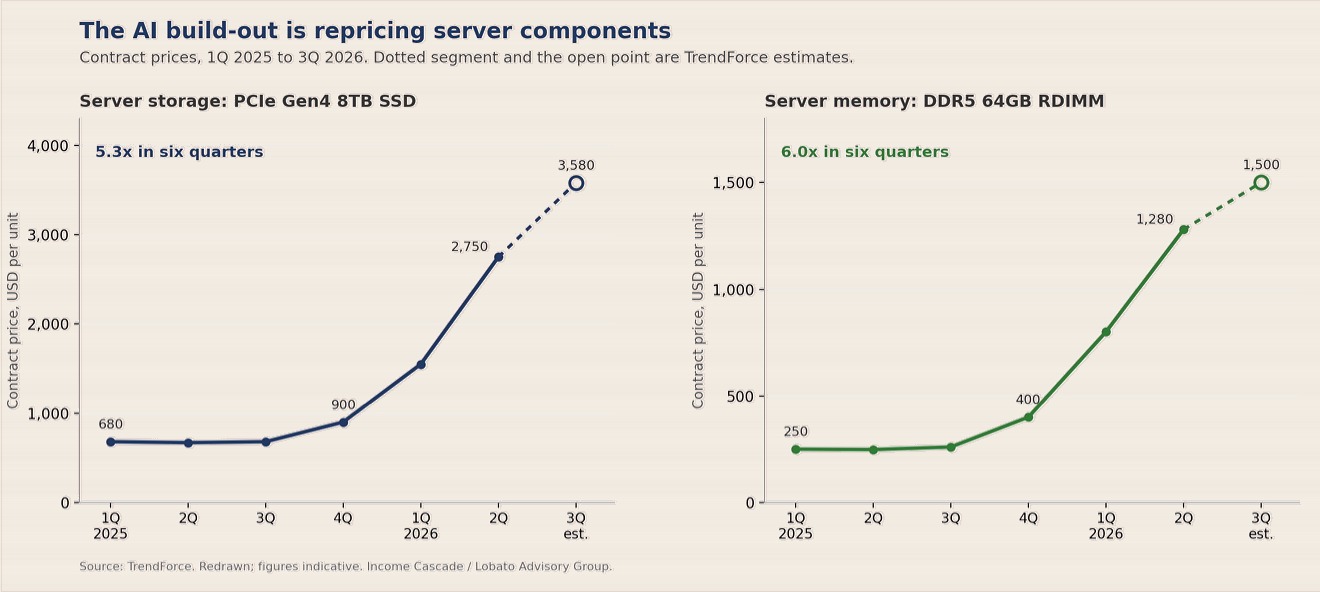
The AI boom is also creating demand for real equipment. Server SSD contract prices rose 5.3 times in six quarters, while DDR5 server memory rose 6 times. That repricing shows how much physical capacity the build-out is consuming before the revenue arrives.
BTC is energy transformed.
BTC and AI = Land + Power + Compute
Data centre electricity consumption, by region
TWh. Consumption roughly doubles between 2024 and 2030, to about 945 TWh.
Doubling every nine months
Nvidia H100-equivalent chips in use worldwide against hyperscaler capital expenditure, by quarter.
- H100 equivalents, reported
- H100 equivalents, projected
- Hyperscaler capex, right axis
- Morgan Stanley forecast level
2024Outperforms the world’s top weather forecasting system.
2025Identifies Alzheimer’s diagnoses and a potential cause.
2026An AI model disproves the planar unit distance conjecture, open since 1946.
The dotted capex extrapolation implies $1.3tn in 2027 and $2.3tn in 2028, far above any published forecast.
“Energy is truly the ONLY universal currency and nothing can take place without its transformation.”Vaclav Smil
Future halvings will keep cutting the block reward. All else equal, miners will earn fewer new bitcoin for the same work. That makes energy cost the deciding factor: operators with access to inexpensive and plentiful energy have the clearest path to profit. Higher-cost operators get squeezed first.
Governments can issue more debt. Companies can issue more debt. Bitcoin cannot issue more than 21 million coins. That does not guarantee a higher price. It does explain why Bitcoin and gold are beginning to trade as two versions of the same question: what holds value when the supply of claims keeps rising?
Sources
Read the record
Primary material and institutional references behind the timeline and market structure. Debt, interest and correlation figures were checked on October 3, 2026.
01Satoshi Nakamoto, Bitcoin: A Peer-to-Peer Electronic Cash System, 2008
02ArXiv survey of Satoshi Nakamoto and Bitcoin’s origins
03CoinDesk history of the 2010 pizza purchase
04FTSE Russell research on Bitcoin’s halving schedule
05IMF research on the growing connection between crypto and equity markets
06Congressional Research Service on the January 2024 spot bitcoin ETP approvals
07US Treasury, Debt to the Penny. Total public debt reached about $40.1 trillion in September 2026.
08CBO, Monthly Budget Review for August 2026. Net interest was $1.05 trillion through eleven months of fiscal 2026.
09CBO February 2026 baseline. Net interest is projected to rise from $1.0 trillion in 2026 to $2.1 trillion in 2036.
10Institute of International Finance, Global Debt Monitor. Global debt reached $365 trillion in the first half of 2026.
11OECD Global Debt Report 2026. Sovereign issuance and total government plus corporate borrowing projections.
12OECD executive summary. Hyperscaler bond issuance and capital spending estimates.
13Grayscale research summary on Bitcoin’s rising correlation with gold, August 2026.
14Bitwise analysis of Bloomberg data through August 31, 2026. Bitcoin and gold reached their highest 90-day correlation in nearly six years.
Bitcoin’s code created scarcity. History created the asset.
The network did not become understandable all at once. It acquired meaning one use case, one crisis, and one new doorway at a time.