The Lab · October 2026
Art Is an Asset. Here Is Why I Own It.
Most portfolios own stocks, bonds, maybe some real estate. Almost none own art. That is starting to change. With equities at records and rates at multi-decade highs, the case for owning something that does not move with everything else is doing real work right now.
This is not about buying paintings because they look nice on a wall. It is about owning a scarce asset that wealthy families have held for generations. Let me walk through the market, the case, and the numbers, with fresh data from the Art Basel and UBS survey of global collecting.
Start with the bear market, because that is where the opportunity is. Global art sales fell from $65.2 billion in 2023 to $57.5 billion in 2024, a 12% drop that ranks as the third-worst contraction in fifteen years. Public auction sales fell 25%. Contemporary art at auction fell 36%, back to 2018 levels. Collectors cut their art allocation from 24% of wealth to 15%. Then 2025 turned: sales grew 4% to $59.6 billion. Bear markets are when allocations get made. Now could be a good time to allocate, or to start.
1Two markets, opposite stories
The art market is really two markets. The auction market is the public one: Christie's, Sotheby's, Phillips. Fully transparent prices. Every record you read about happens here. The bigger half is invisible: galleries, dealers, and private sales, more than half of all transactions, almost none of it public. Right now the two halves are telling opposite stories.
On the auction side, per Bank of America's fall 2026 update: May in New York nearly doubled last year's totals. The S.I. Newhouse collection brought $631 million. In London, the Joe Lewis collection set a European record at $393 million, and notably it was not an estate sale and carried no guarantee. That is a consignor choosing to sell because the market is strong, and keeping all the upside. Day sales improved on every metric. Even collectible design is up 63% this year, and someone paid $50.1 million for a T. rex skeleton.
On the gallery side: Pace, one of the mega-galleries, cut about 50 artists from its roster. The former global director of Art Basel wrote in the New York Times that galleries are not OK. The primary market is dealing with rising costs and buyers who have become extremely selective.
2The rotation underneath
What explains the split is a violent rotation into quality. Auction sales of Impressionist and Modern art are up 133% this year. Young Contemporary art, the speculative end that boomed in 2021, is down 88% from its peak. Collectors got burned on emerging names and moved their money to artists with a century of price history. The UBS survey confirms it: established artists now make up 46% of works in collections, up from 25% in 2024, while buying of newly discovered artists fell to a five-year low.
This is the oldest lesson in art: quality is the whole game. The middle does not hold. A Warhol or a Basquiat has a market in every cycle. A hot young name has a market until it doesn't.
3The allocation question
Here is the chart that matters most. The average collector's allocation to art peaked at 24% in 2022 and has fallen to 15% in 2026. Rising rates, a preference for liquidity, and financial assets beating art on returns all played a role. But 15% is still well above what portfolio textbooks suggest, which is 3% to 10% for a conventional portfolio.
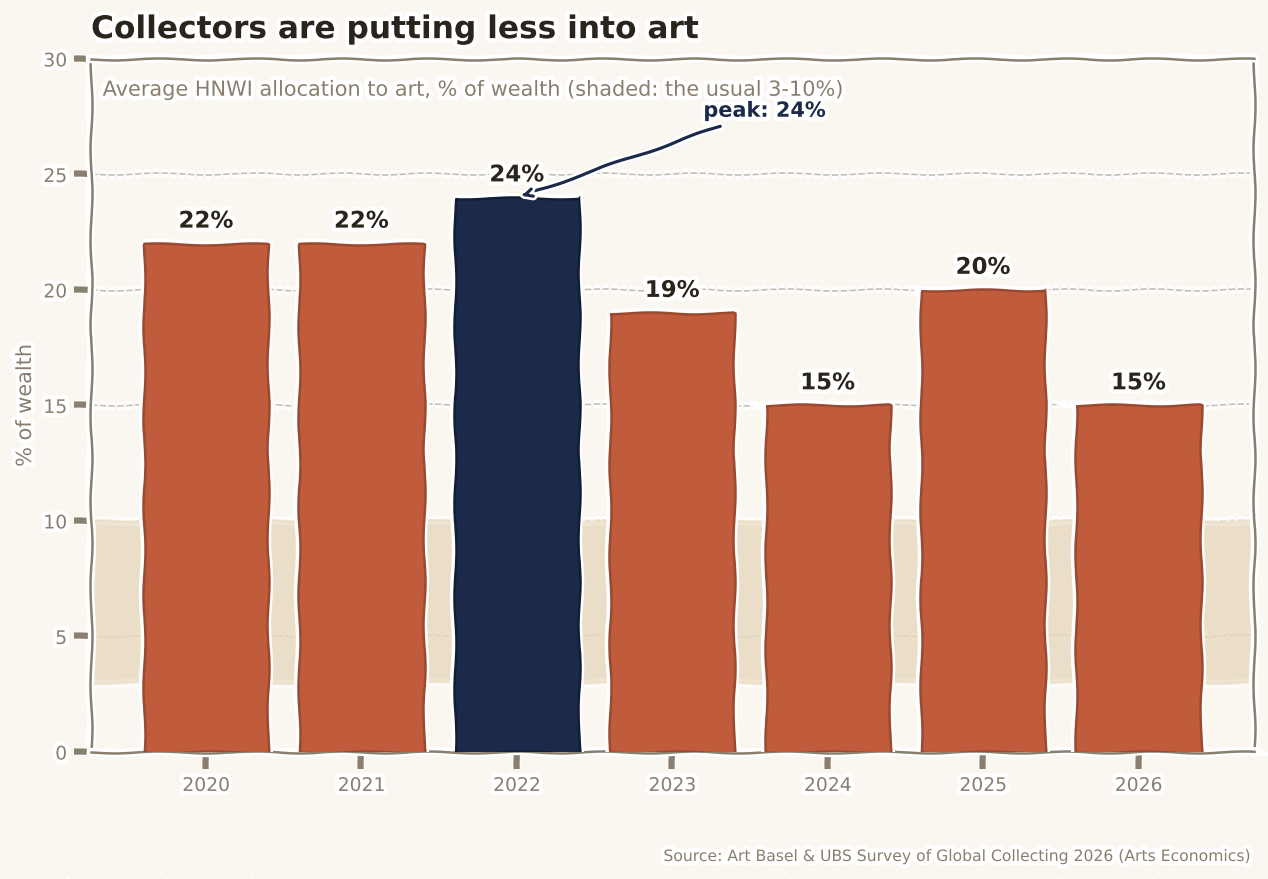
Average HNWI allocation to art, 2020-2026. Source: Art Basel & UBS 2026.
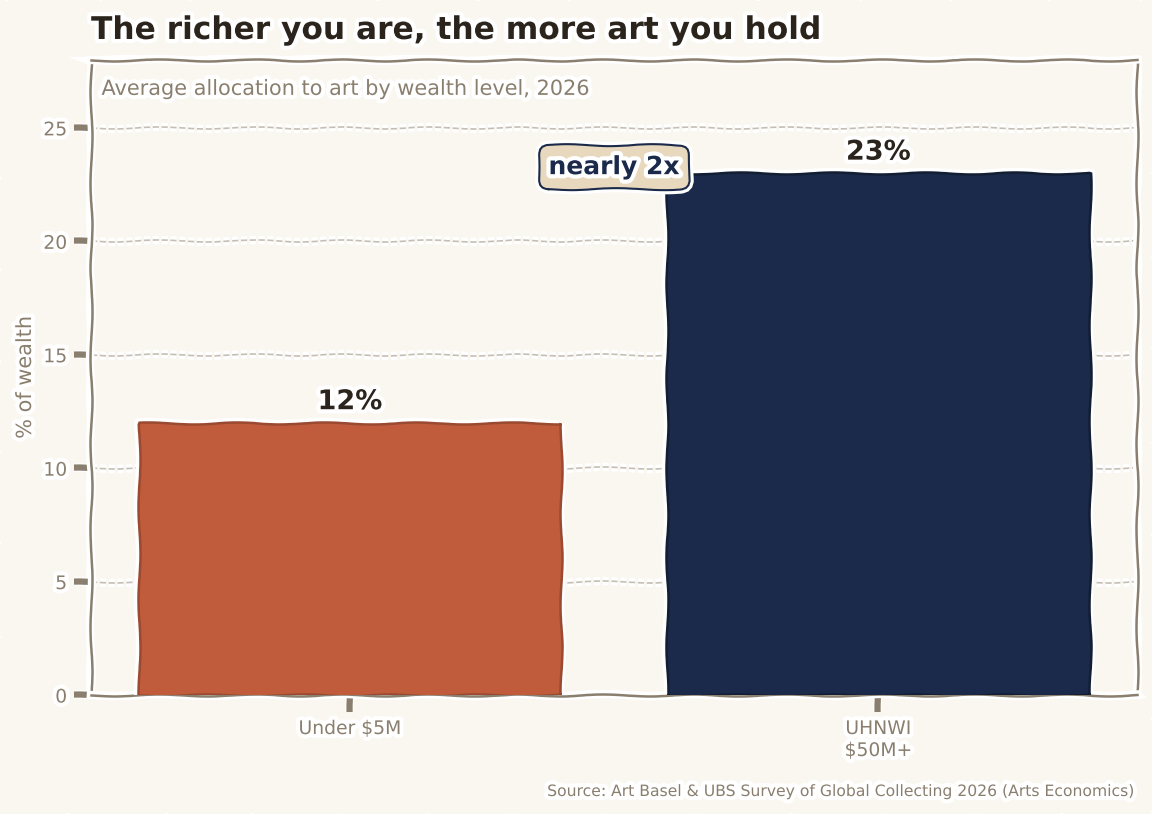
Allocation rises with wealth: 23% for UHNWIs vs 12% under $5M. Source: Art Basel & UBS 2026.
My own answer is about 5% today, and I plan to grow it to 10% over time. Art is wealth insurance and diversification in my book, not a return engine. That was never the job I hired it for. The textbook range backs the sizing. The enthusiasts at 15% and the ultra-wealthy at 23% are playing a different game.
\nMy portfolio is still young: the average holding period across my 29 positions is about three and a half years, against a seven to ten year target hold. The 18% exits are Masterworks' realized record across their offerings, not mine yet. I have had no exits.
4Who is actually buying
The buyer base has never been larger or richer. The billionaire population hit a record 3,428 people worth a combined $20.1 trillion in March 2026, the third straight year of double-digit wealth growth. The millionaire ranks keep widening too: 57.5 million people holding $251 trillion. And wealth keeps concentrating at the top: 1.5% of adults now own 48% of the world's wealth.
This matters because art is a top-heavy market. A small number of wealthy collectors drive a large share of demand, which is why blue-chip works hold up when the middle of the market falls apart.
5How collections start
Most collectors do not start as investors. They start as family members. 28% say family got them into it, through a family collection or a relative's encouragement, and for Gen Z it is 40%. Museums and culture come next at 22%. Finance as a motive is only 14%. And nearly everyone starts in the same place: paintings, named among the first three collecting areas by 43% of collectors, more than double any other area.
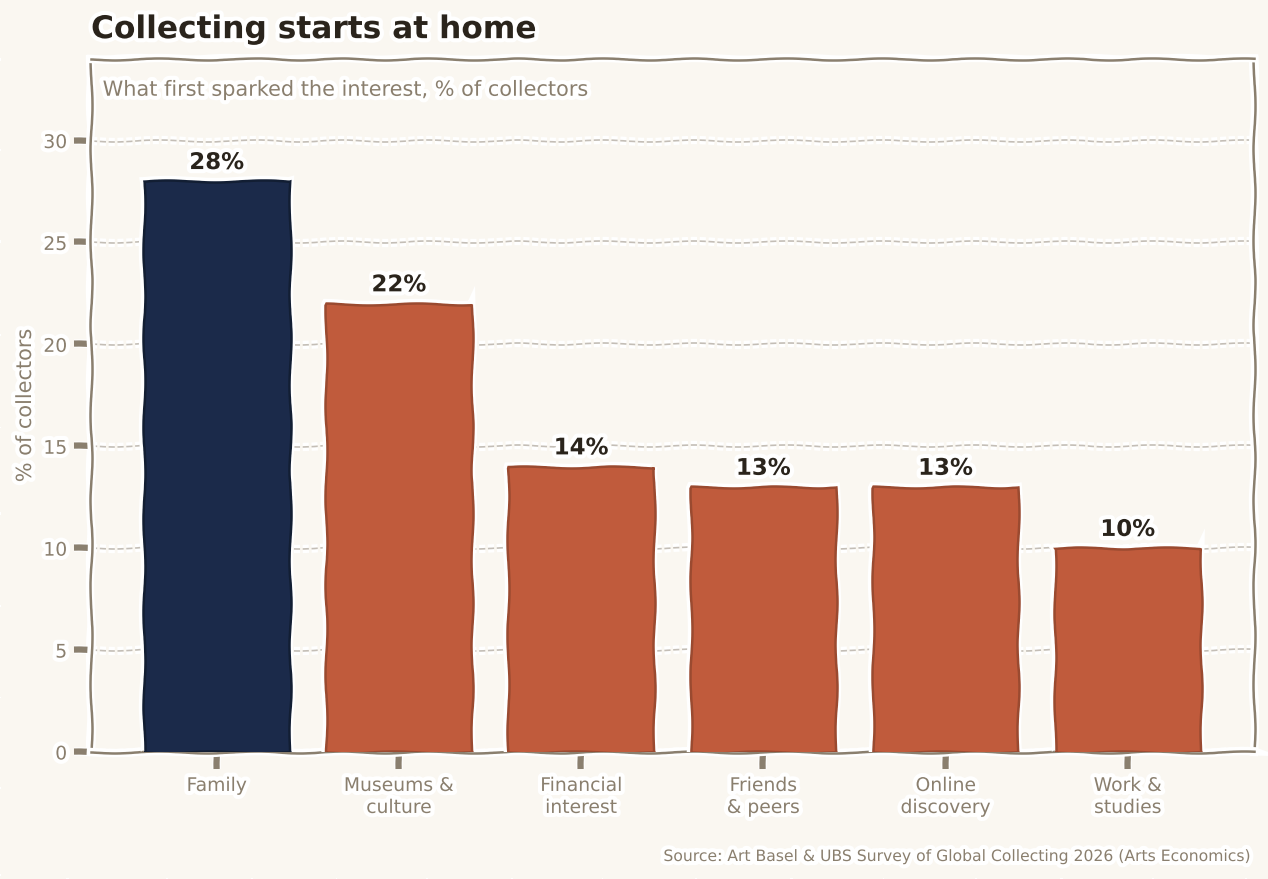
What first sparked the collecting interest. Source: Art Basel & UBS 2026.
Watch what people do, not what they say. They start with paintings, they learn through family, and then the serious ones rotate into established names.
6What comes next
For all the caution in allocations, collectors are still net buyers. 39% plan to buy more art over the next 12 months versus 23% planning to sell, and buyers outnumber sellers in every region surveyed. A majority expect the market to grow through the rest of 2026 and over the next decade.
7How I own it
I hold my high-end art allocation through Masterworks. The structure is simple: each painting sits in its own LLC, registered with the SEC, and I own fractional shares. They buy blue-chip works, hold them for 3 to 10 years, handle storage and insurance, and sell when the time is right. I get the economics minus their cut: 1.5% a year plus 20% of the profit at sale.
Their realized exits have all cleared 18% annualized. That is selection and timing, which in art is the whole game. What I like about the setup: I can own pieces of works by artists like Basquiat and Kusama without writing eight-figure checks, the custody and sale are handled, and the portfolio sits in exactly the established artists the current market rewards. What I accept: my money is locked up for years, the secondary market for early exits is thin, and the fees are real. It is how I access the high end of the market.
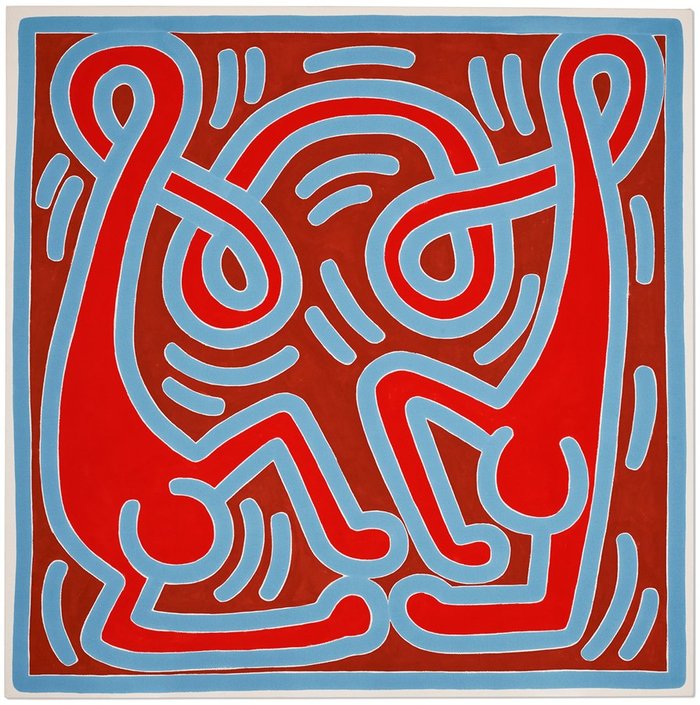
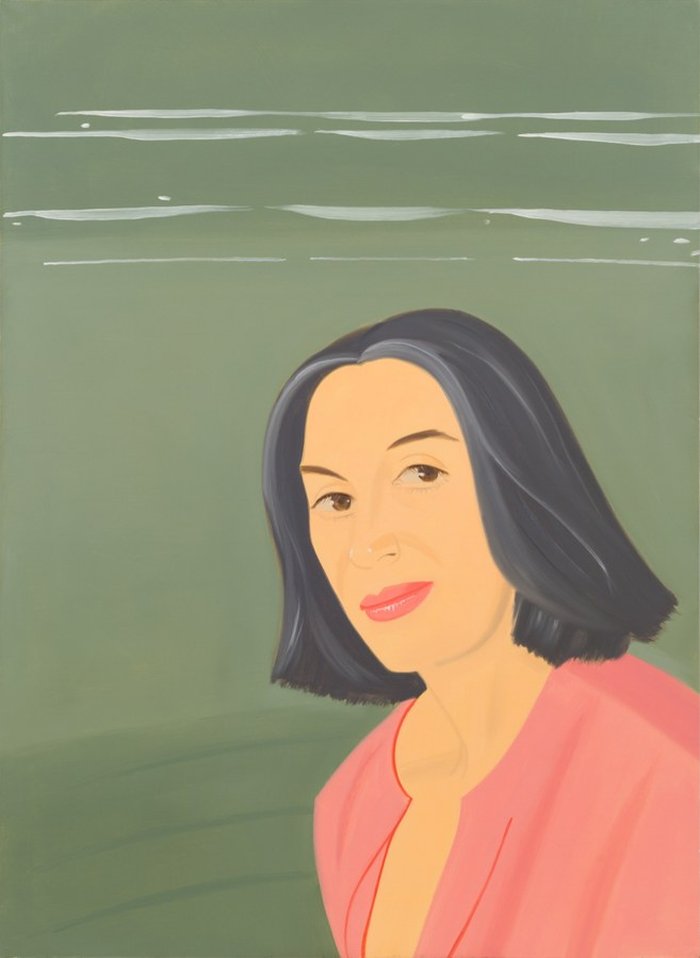
Sample of my Collection
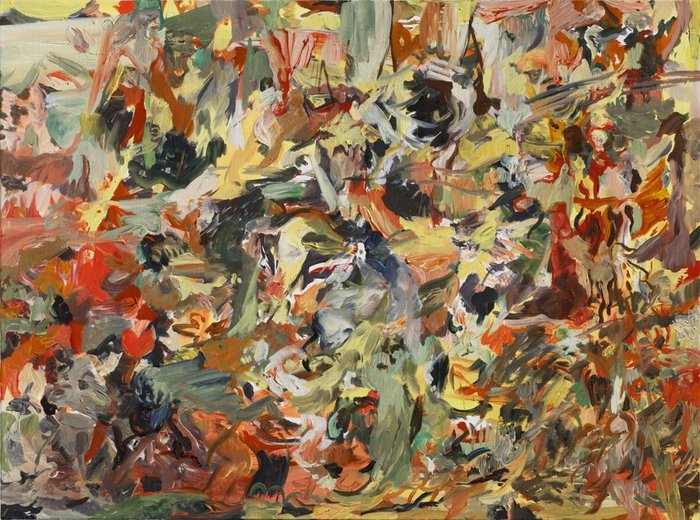



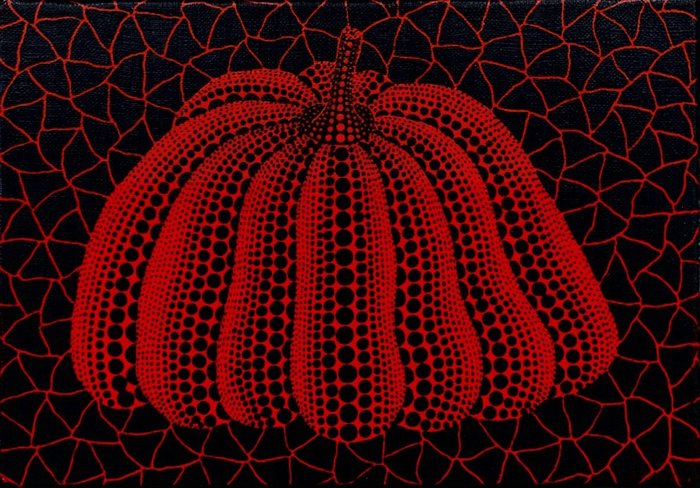
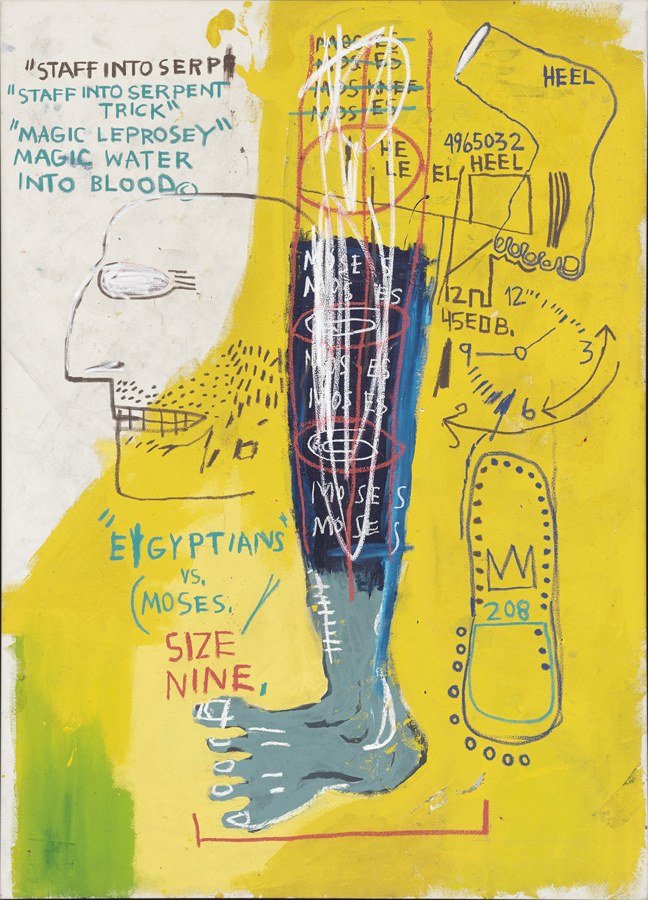

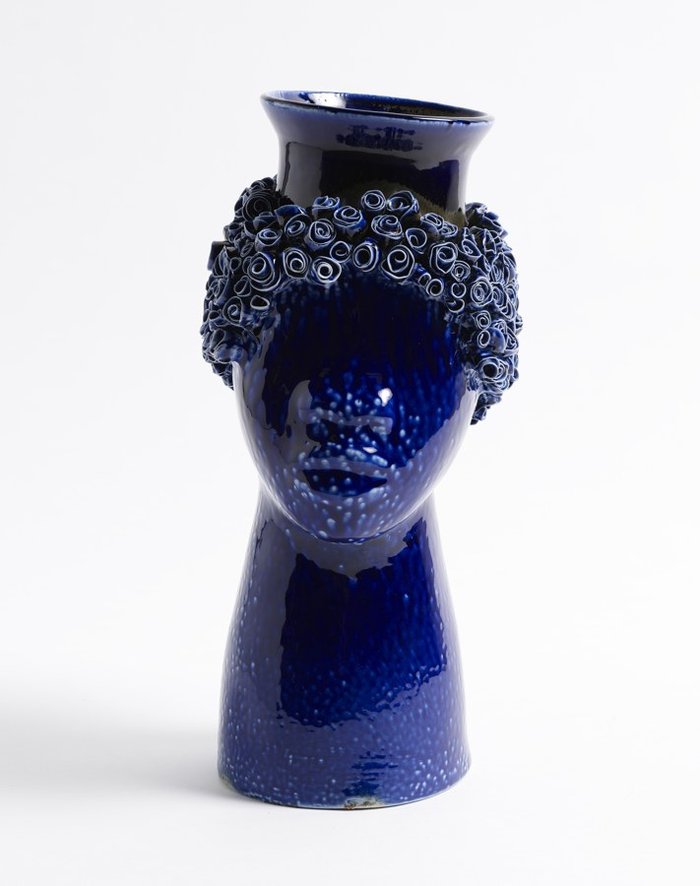
8Two different returns
Paul Allen's estate sold $1.6 billion of art in November 2022 for a 6.2% annualized return over 18 years, against 8.9% for the S&P. That gets quoted as the case against art, but it is not a fair comparison. Late 2022 was the bottom of the art cycle, and the estate sold into it. A top-tier Pollock at 6.6% a year for 26 years is the steadier evidence. The long-run number for great art, bought well and held, is 6 to 7%. It trails equities. That part is fair.
But the market return is not the manager return. Art is the most selection-driven asset on earth: which artist, which work, when you buy, when you sell. The spread between a 6% market return and 18% realized exits is the entire argument for paying people who do this full time instead of buying blind.
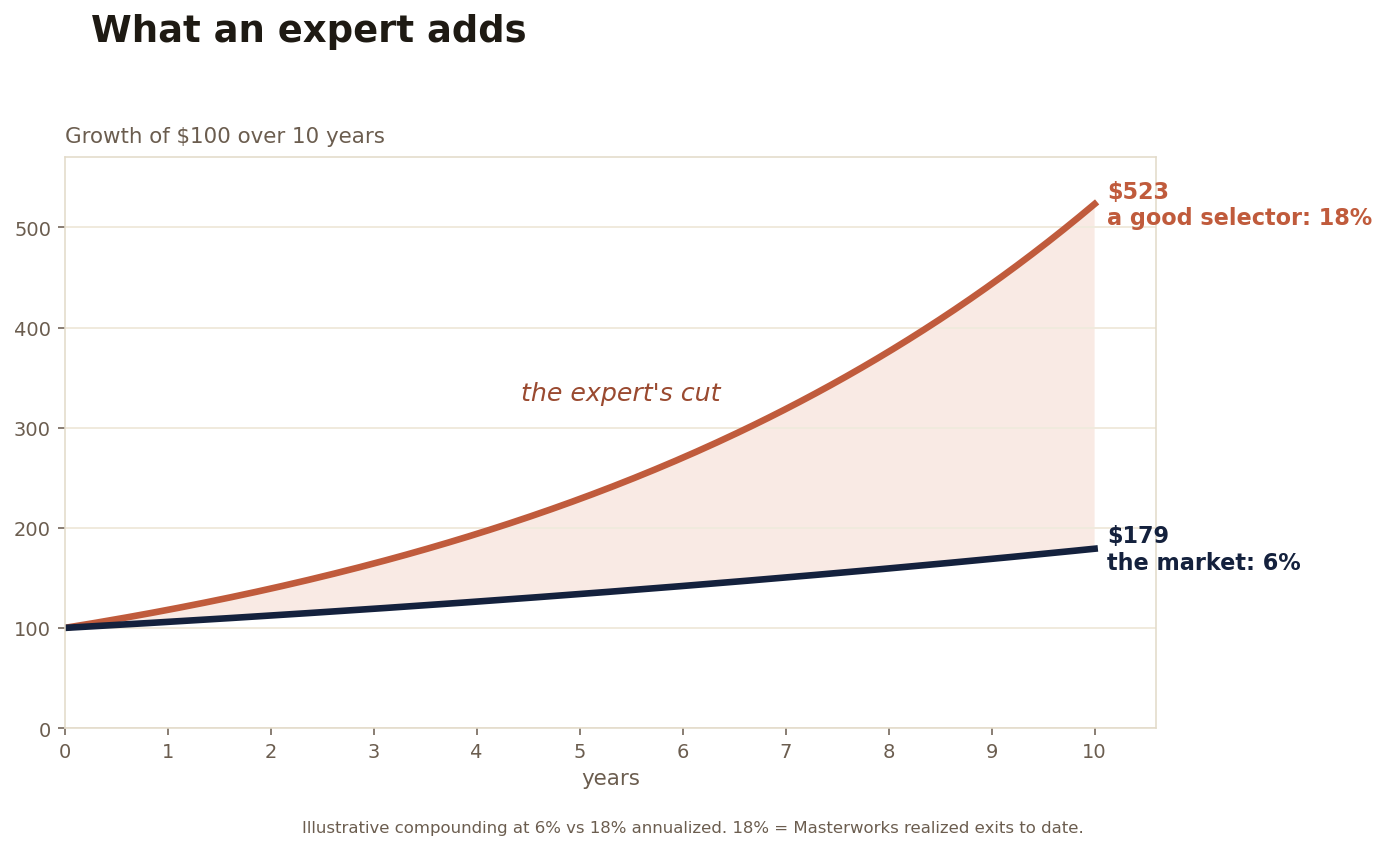
The 6% vs 18% gap: $100 compounding for 10 years. The 18% is Masterworks' realized exits to date.
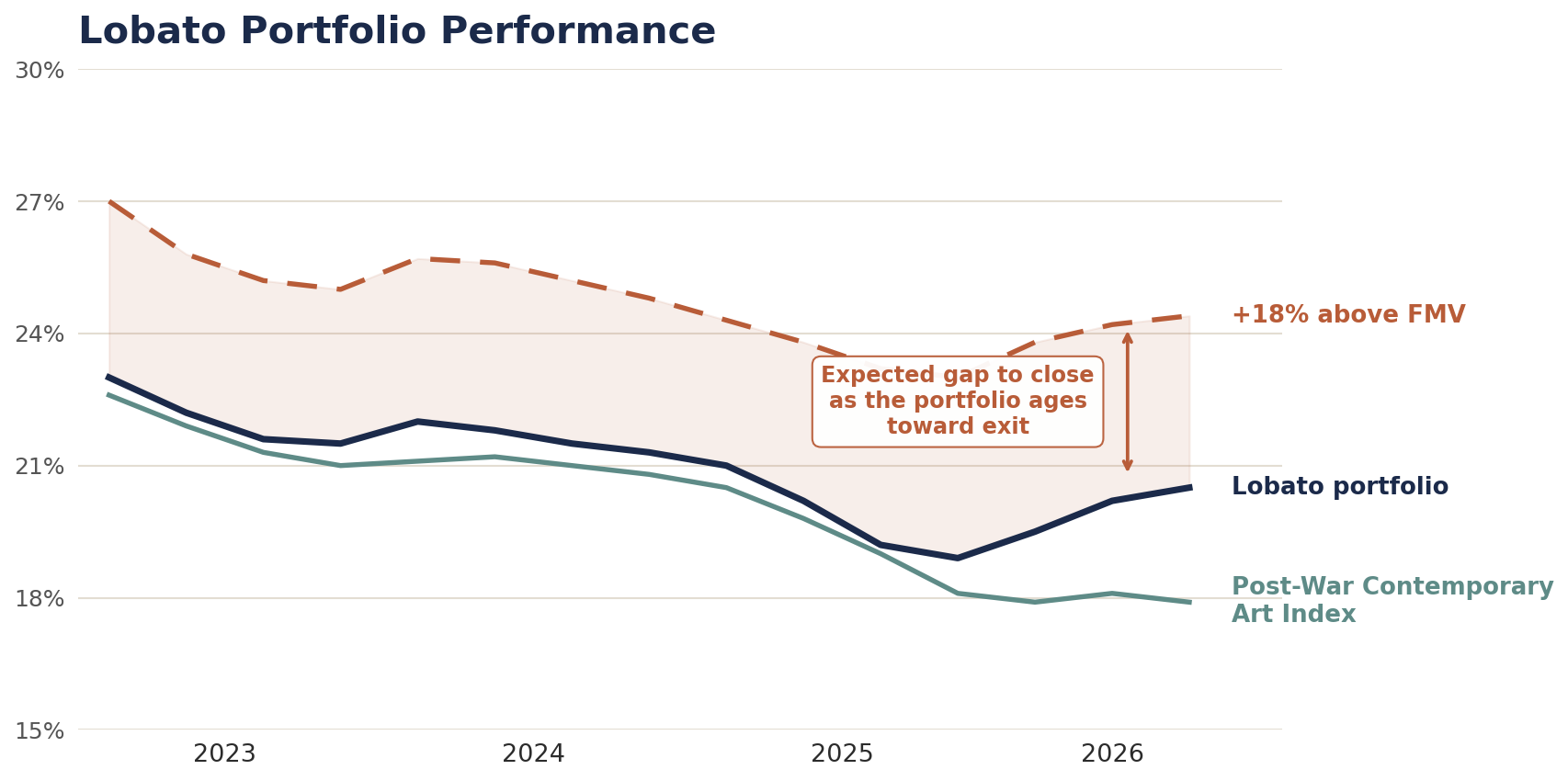
Lobato portfolio performance vs the Post-War Contemporary Art Index, from the Masterworks dashboard: +11.6% (+31.7% assuming an 18% premium to fair market value at exit), October 7, 2026. That 11.6% is Lobato portfolio performance, built from a standing start in the middle of a bear market. First purchases were November 2022.
So it comes down to two lines. The asset class gives you diversification and a 6 to 7% long-run compounding on the best works. A good selector, buying blue chip and selling into strength, can do multiples of that. I size art at 5% for the first reason, and I use Masterworks for the second.
9So what
- Own art for diversification, not returns. It belongs in a portfolio for the same reason wealthy families have always owned it: it preserves wealth across cycles that damage everything else. It will not beat your equity book in a bull market. It is there for the years when the equity book needs help.
- Quality is the trade right now. The market is paying record prices for established names and punishing speculation. That is exactly the environment where blue-chip exposure works. In art, you buy quality and you hold it for a very long time.
- Keep the allocation honest. This is a 5% position, not a core holding. It earns its place through diversification, not through returns. Size it like insurance, not like a trade.
10Sources
- Masterworks
- Art Basel and UBS Global Art Market Report 2026
- Bank of America 2026 U.S. Art Market Report
Get The Weekend Spread
One edition every Saturday morning. Markets, ideas, and the occasional T. rex.
SubscribeData: Art Basel and UBS Survey of Global Collecting 2026 (Arts Economics), Bank of America Private Bank Art Market Fall Update 2026, Forbes via Arts Economics. Not financial advice. Art is illiquid and every piece is unique; past results do not predict future returns.