Options sound complicated. They are not. Here is the whole idea.
An option is a contract with a price, a deadline and a rule.
Two rights
A call is the right to buy a stock at a set price, before a set date.
That set price is called the strike. You pay a small fee for the right. That fee is called the premium. If the stock never gets there, you walk away. You only lose the fee.
A put is the mirror image. It is the right to sell a stock at a set price, before a set date.
Same deal. You pay a premium for the right. If the stock never falls there, you walk away. You only lose the fee.
Two rights, four moves. Buy or sell a call. Buy or sell a put. That is the whole vocabulary.
One standard equity option contract normally represents 100 shares. The exact contract terms always matter.
Move one: buying a call
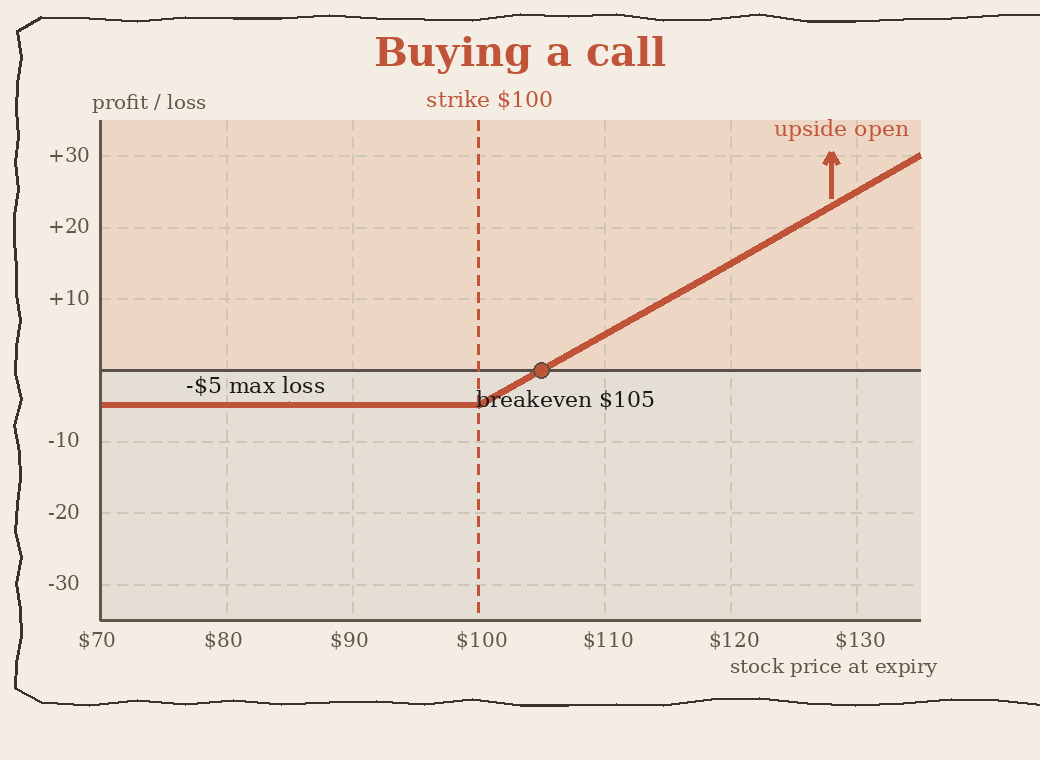
Say a stock trades at $100. You buy the $100 strike call for $5.
If the stock stays under $100, you lose the $5. That is your max loss.
If it runs to $120, you make $15. The higher it goes, the more you make.
Limited risk. Open ended upside. You buy a call when you think the stock goes up.
Move two: selling a call
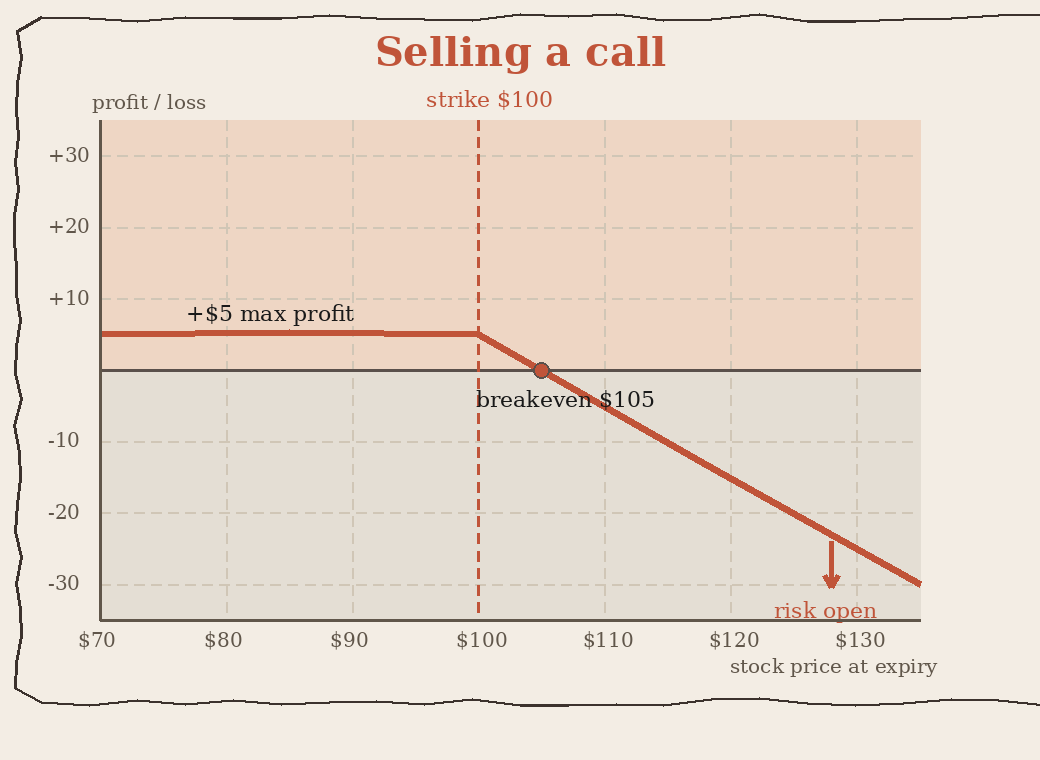
You collect the $5 premium up front.
If the stock stays under $100, you keep all $5. That is your max profit.
If it runs past $105, you start losing. And there is no ceiling on how much.
You sell a call when you think the stock stays flat. Or to earn income on shares you already own.
Move three: buying a put
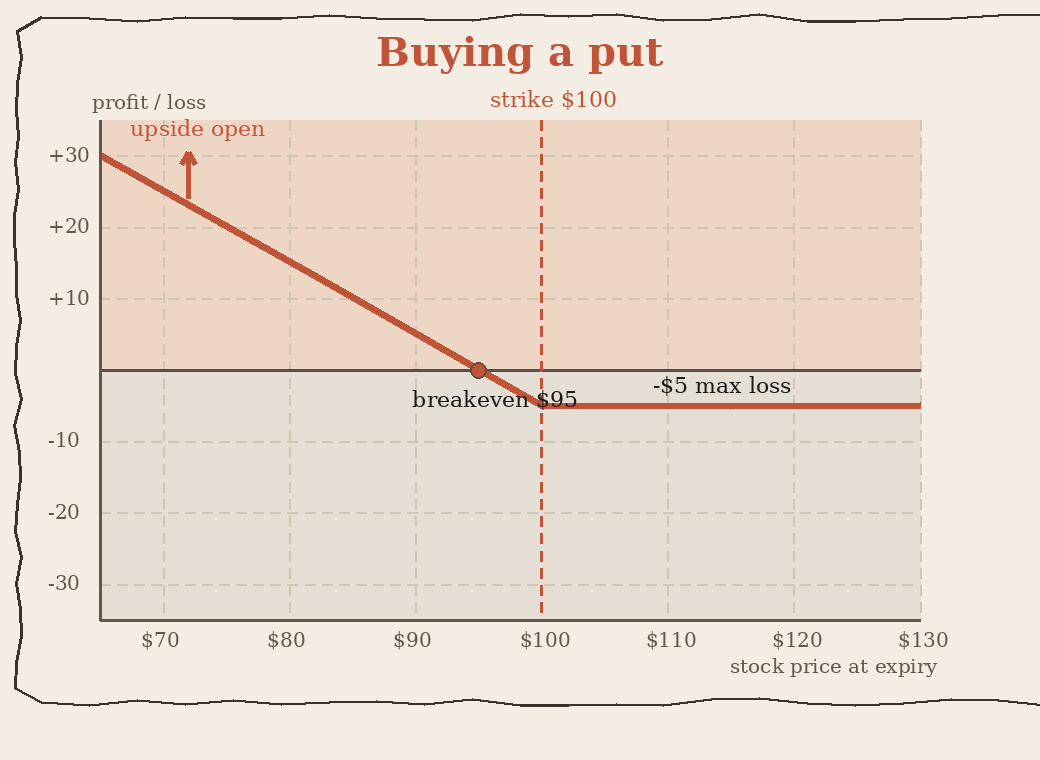
You buy the $100 strike put for $5.
If the stock stays above $100, you lose the $5. That is your max loss.
If it falls to $80, you make $15. The lower it goes, the more you make.
You buy a put when you think the stock drops. Or as insurance on shares you own.
Move four: selling a put
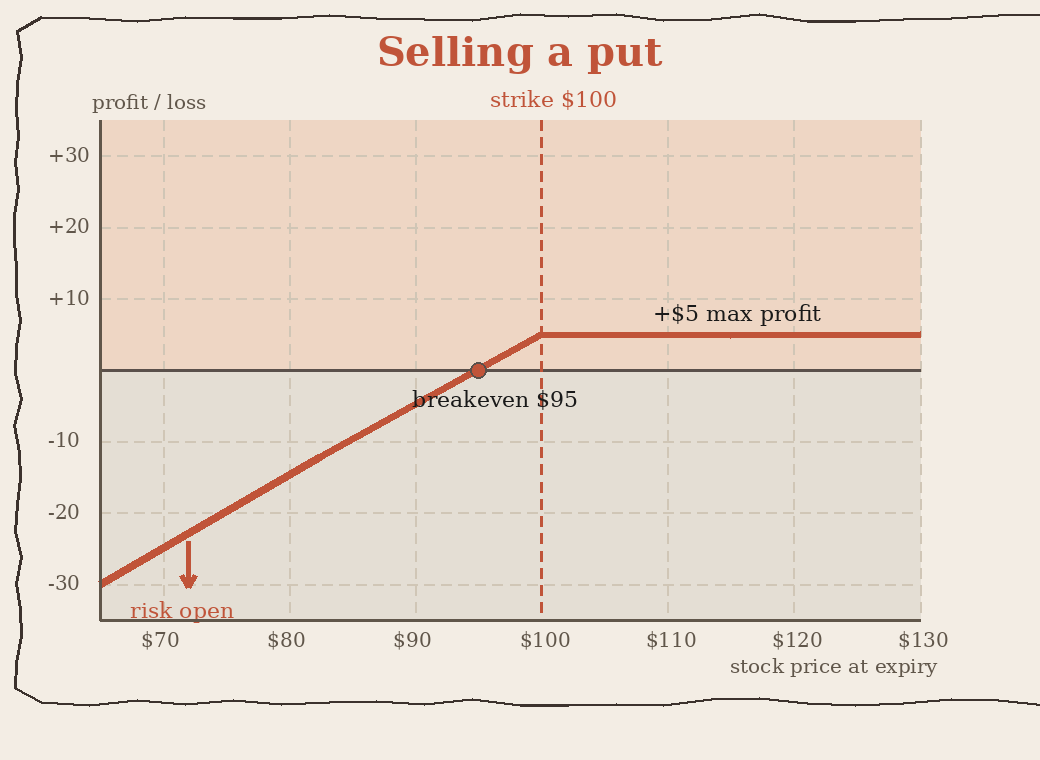
You collect the $5 up front.
If the stock stays above $100, you keep it all. That is your max profit.
If it falls under $95, you start losing, and you are on the hook to buy the shares at $100.
You sell a put when you would be happy to own the stock at the strike price anyway. You get paid to wait.
The combination: spreads
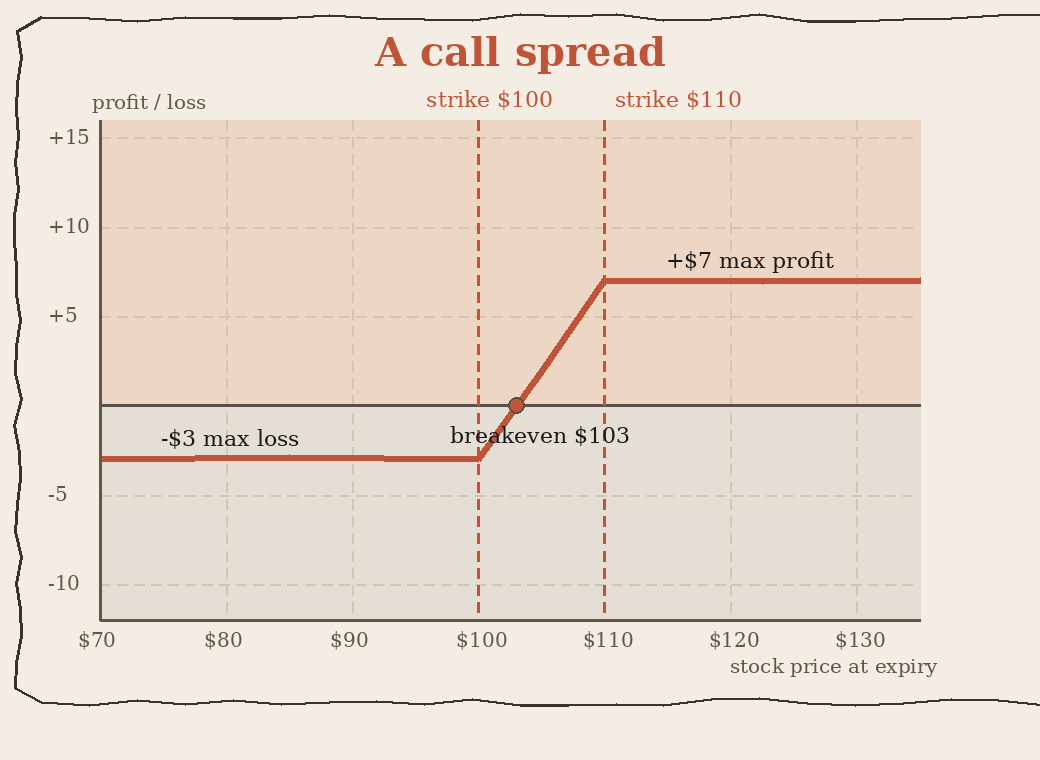
A spread pairs a buy with a sell. You buy the $100 call for $5, and you sell the $110 call for $2.
Your cost is $3. That is your max loss. Your max profit is $7, the $10 gap minus your $3.
Capped upside, but a lower cost and defined risk. This is the structure I use.
No surprises. You know your best day and your worst day before you start.
Four moves, one combination.
Options are not magic. They are just risk, defined and priced.